
Charles County Parole and Probation
Maryland separates release decisions from day-to-day supervision. The Maryland Parole Commission considers parole and revocation matters. The Division of Parole and Probation, commonly called DPP, supervises people on parole, probation, and mandatory release in the community. This split matters when checking a Charles County record. A Commission decision may permit parole, but DPP handles the field supervision that follows. A court, rather than the Commission, usually imposes probation.
Physical release does not always end legal control. Under Correctional Services §7-308, a person on parole remains in legal custody until the full undiminished term expires. Mandatory supervision is also conditional. It occurs when a qualifying sentence, less applicable diminution credits, reaches the statutory release point. By contrast, discharge means the supervision term has ended. The underlying order, later docket entries, and the responsible agency record provide the sound basis for telling these events apart.
| Status | Who creates it | How it is verified |
|---|---|---|
| Parole | Maryland Parole Commission conditionally approves release from a state term. | Parole order, court file, Commission record, VINE event, and DPP office. |
| Probation | A Maryland court imposes community supervision, often with a suspended sentence. | Sentencing order, Case Search docket, full court file, and DPP office. |
| Mandatory supervision | State law produces conditional release after qualifying credits are applied. | DOC release record, VINE notice, sentence and credit records, and DPP. |
| Discharge | The court or supervising authority records completion of the applicable term. | Final docket entry, supervision record, or formal discharge document. |
Verify Charles County Post-Release Supervision
No verified public Maryland DPP search accepts a name and returns a person's supervision status. Charles County parole and probation therefore require a record-based sequence. Start with the criminal case and match the person by more than a common name. The sentence, probation entry, and later modifications can establish what the court ordered. For parole, §7-308 requires a copy of the parole order to be filed with the clerk of the court that imposed the sentence. That makes the court file a durable route even when the person no longer appears in a custody locator.
- Open Maryland Judiciary Case Search. Match the Charles County case, birth information, charge, and case number.
- Read the sentencing, probation, commitment, modification, and violation entries. Obtain the full order from the clerk when the online summary lacks key terms.
- For parole, seek the filed parole order or contact the Maryland Parole Commission through its official channels.
- Check Maryland VINE for a custody or described supervision event. Re-register when the person moves between jail, prison, court levels, or DPP supervision.
- Contact the DPP Waldorf Field Office to ask which office handles a known case. Do not expect unrestricted person-level disclosure.
- When documentary proof is required, request the existing order or supervision record from the court, Commission, or DPSCS records channel.
The Charles County released-inmate search and records path helps determine whether the first move was community release or transfer. That distinction should be settled before a supervision conclusion is drawn. A state locator hit can mean the person left the county jail but remains confined in a Maryland facility.
Charles County Probation Office Contacts
The local supervision contact is the DPP Waldorf Field Office/DDMP. Its role is more specific than the jail's. CCDC can address present county custody, while DPP can route questions about a known supervision case. Staff may apply identity, confidentiality, and disclosure limits. A caller should have the person's full name, case number, sentencing county, and known supervision type ready. Asking which office handles a case is more precise than asking for a broad personal history.
DPP Waldorf Field Office/DDMP
25 Industrial Park Drive
Waldorf, MD 20602
Main: 301-396-8800 or 866-369-6710
Intake: 301-396-8823
Fax: 301-396-8838
DPP Headquarters
6776 Reisterstown Road, Suite 212
Baltimore, MD 21215
410-585-3500 or 877-227-8031
The official office directory is also useful visual evidence of the Charles County supervision route. The DPSCS listing for the Waldorf field office identifies the local address and contact lines.
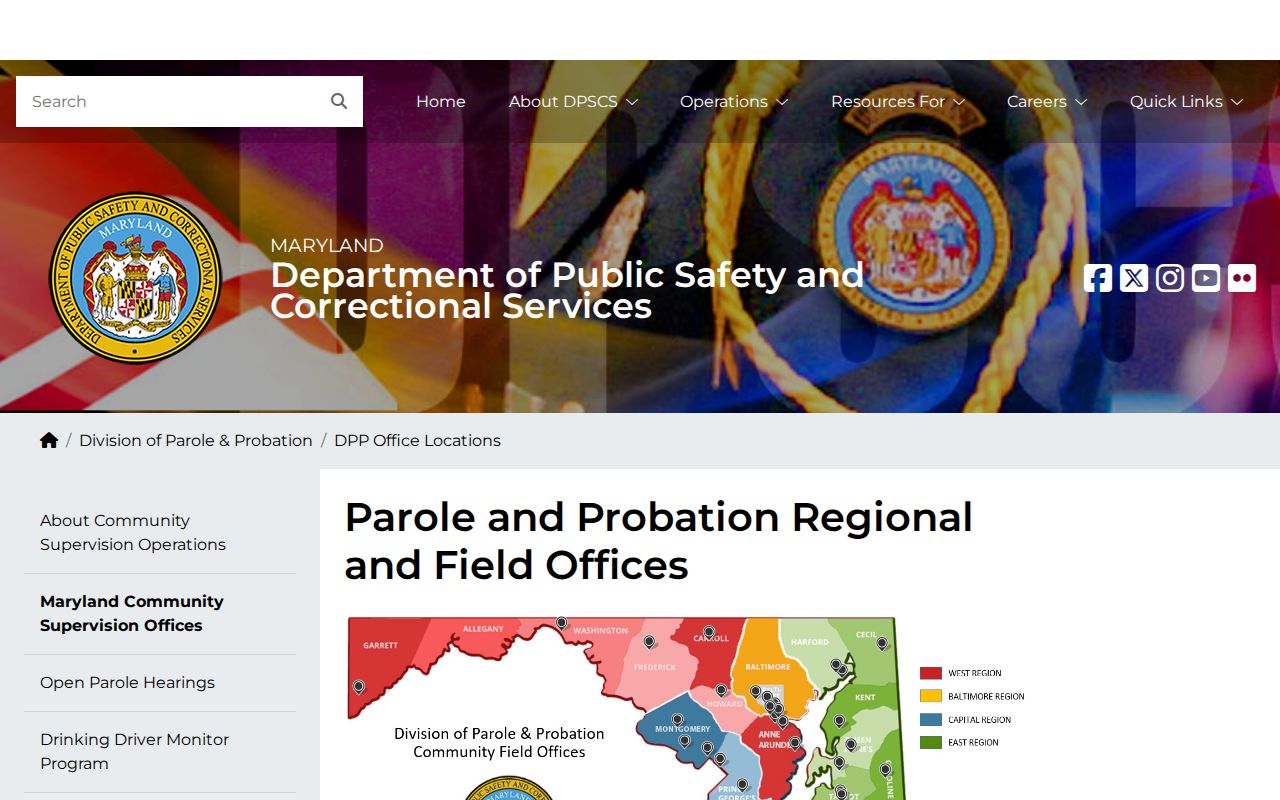
The listing anchors a supervision inquiry to the proper state office without suggesting that a public name-search exists.
Note: Published contacts provide a routing channel, but they do not guarantee disclosure of a person's supervision details to every caller.
Charles County Parole Decision Records
A parole hearing result is not the same as an actual release. The Maryland Parole Commission describes three main outcomes: approve, rehear later, or refuse or deny. A typical hearing uses an interview by a hearing officer who recommends action to a commissioner. Life and homicide matters use a two-commissioner panel. Approval can still depend on a suitable home plan, completion of required programs, and a future release month or year. An approval may also be suspended if conditions are not met or rules are violated.
The Commission's public meeting calendar concerns agency governance. It is not a person-level hearing docket. An official open-hearing list found during research covered only open hearings and ended in 2025, so it should not be treated as a current list of all Charles County parole cases. No statewide public decisions search was found. Registered victims using the written notification process may receive outcomes from MPC Victim Services. Other lawful inquiries should use the filed court order, the Commission records route, or agency contacts.
The MPC hearing FAQ shows how recommendations and outcomes work. Its official screen helps separate a decision from the later custody event.
The process shown there supports one key rule: use VINE, DOC, or the actual release record for the out date, not the approval alone.
Charles County Supervision Violations
Conditions vary by order, so the signed probation or parole document controls. At a high level, a violation allegation can lead to a court hearing, Commission action, a warrant, changed conditions, or revocation. Revocation means the authority cancels the conditional release or supervision status and may return the person to confinement. It should not be inferred from a rumor, an old docket, or disappearance from an online system.
No current public Maryland or Charles County absconder name list was verified. An absconder is a person alleged to have stopped reporting or otherwise left supervision without authorization. Absconding is not discharge. DPP describes warrant-apprehension work and gives 877-227-8031 for nonemergency information about an alleged violation. Check the official docket, MPC material, and DPP contact instead of relying on an unverified list. If VINE is already in use, recheck the record because a custody return or supervision event may create a new notice.
- Parole
- Conditional release from a state sentence by the Maryland Parole Commission.
- Probation
- Court-ordered supervision that may accompany a suspended sentence or other disposition.
- Absconder
- A person alleged to have left supervision or stopped required contact without approval.
- Revocation
- Formal cancellation of conditional release or supervision after the required process.
- Discharge
- The recorded end of the applicable supervision term.
Charles County Supervision Notifications
Maryland VINE covers more than a single county-jail status. Official material describes custody, court, protective-order, and probation or parole events. Yet coverage can break at system boundaries. A person may move from CCDC to a state prison, from one court level to another, or from confinement to community supervision. Re-searching and re-registering after each move protects the continuity of an alert. VINE and written DOC Victim Services notification are separate registrations.
The Maryland Sex Offender Registry has a much narrower role. It applies only to a person with a statutory registration duty. The registry may show a name, photograph, and location-related information, but DPSCS warns that it can lag and that positive identification is based on fingerprints. A registry entry does not establish the CCDC release time or the entire supervision status. No entry says nothing about the general population of released people.
The official Maryland registry displays its limited scope and identification cautions.
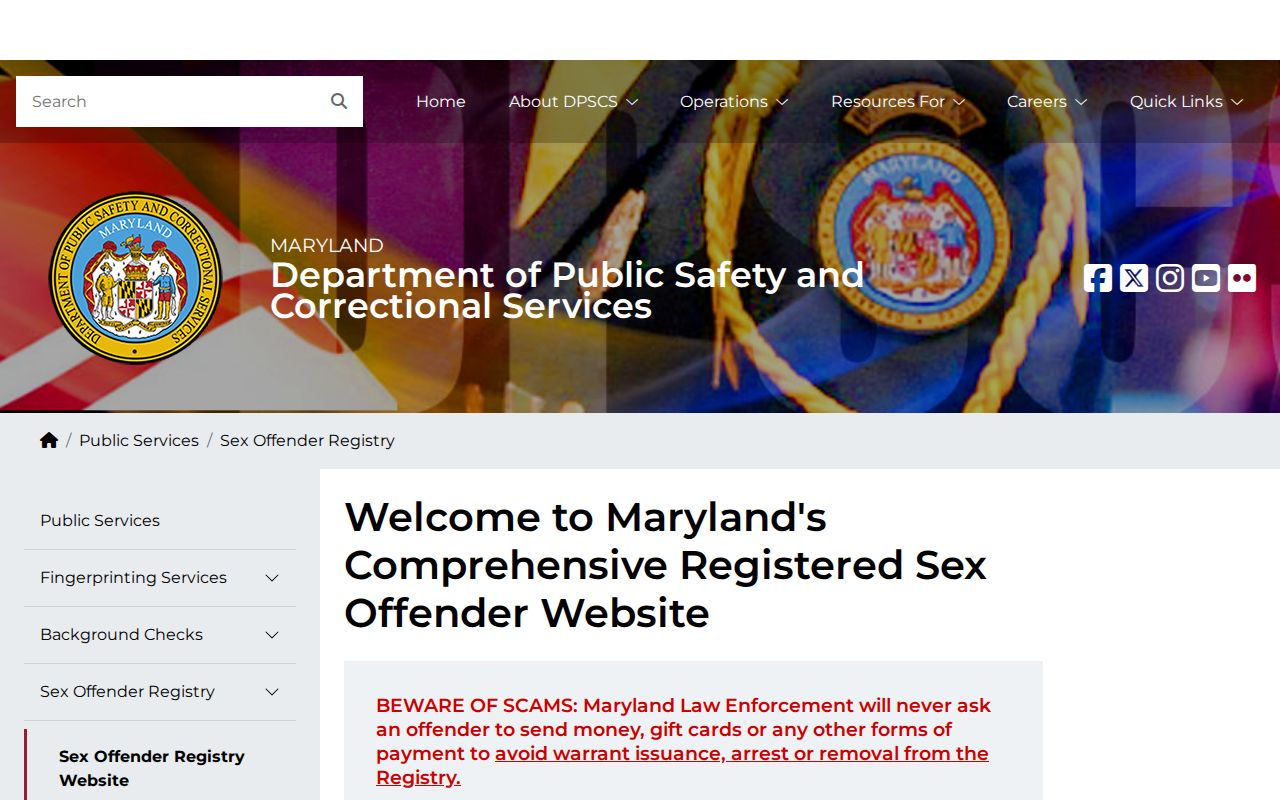
That warning is why a registry check cannot replace the Charles County parole order, probation judgment, or DPP record.
Note: VINE notices are useful leads, while the signed order and agency record establish the legal terms of supervision.
Charles County Release Reentry History
Charles County has a distinct reentry history, but its programs must be described with dates and limits. Historical CCSO reports identify Successful Transitioning and Reentry Skills, known as STARS, along with reentry fairs, GED activity, and work or school release. Current detention material retains broad program language. Those records show that transition support has been part of local corrections practice, not that every named program remains available now.
The former Detention Center Annex adds an important caution. It once housed work-release activity, but CCSO later reported that the program there ended before the building became South Patrol District One. An old Annex or work-release reference therefore should not be read as a current supervision placement. Anyone planning for a Charles County release should confirm present program availability with CCDC or the supervising DPP office. Historical services and current conditions are not interchangeable.
Charles County Supervision Discharge
Supervision ends through a documented event, not simply through the passage of a date shown in an informal source. For probation, look for the court's closure, termination, or discharge entry and obtain the order if the summary is unclear. For parole or mandatory supervision, use the supervising and release records to determine whether the term expired, was discharged, or changed after a violation. A parolee may remain in legal custody through the undiminished term even while living in the community.
Keep three events separate: physical release from confinement, the start of community supervision, and final discharge. The first can be supported by VINE or an agency release record. The second comes from the parole, mandatory-supervision, or probation order. The third needs the final court or agency record. Reading all three prevents a common Charles County error: calling someone fully discharged merely because a jail or prison locator no longer returns a current-custody result.